
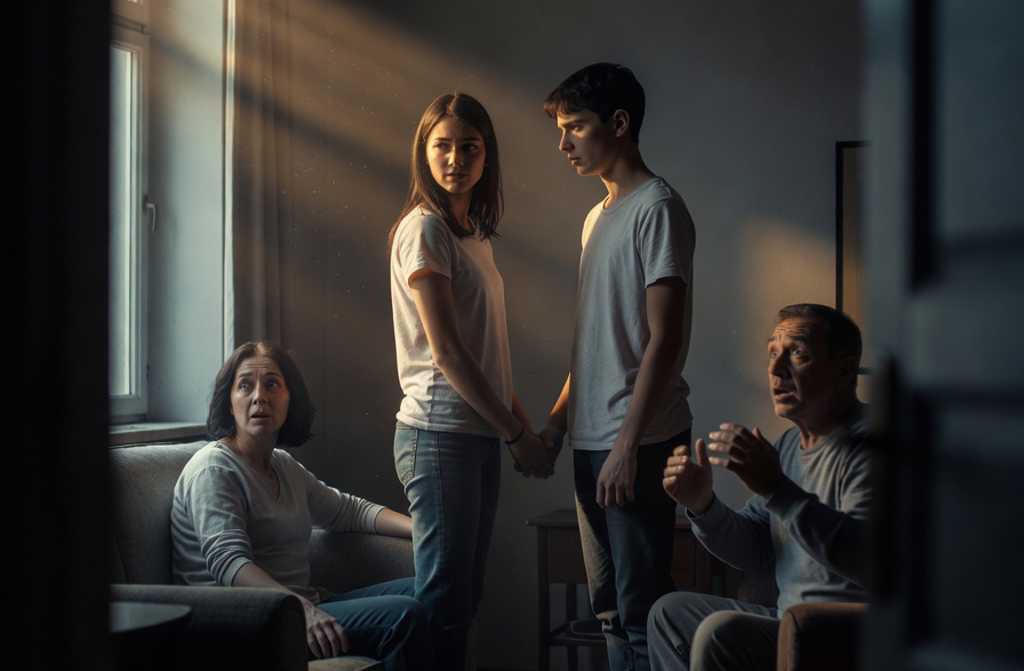
The air in the Budapest apartment block’s stairwell vibrated with raw fury as a woman’s voice exploded from behind a closed door: “What is wrong with you this time?! How much longer must I endure this?! I am utterly exhausted!”
Hajnalka and Máté froze on the stairs as if struck by an unseen force. Their eyes met for a heartbeat, exchanging an entire conversation without sound. The understanding was instant: leave now. They released a shared breath and turned away from the building in silence, with no intention of returning that evening.
Spending hours trapped in their parents’ endless clashes appealed to neither. The siblings walked with purpose toward the neighboring entrance where their grandmother Erzsébet lived. Her apartment had become their true refuge in recent months. Occasional weekend stays had shifted to almost nightly shelter.
The parental home had grown suffocating. The adults screamed without pause, blind to everything around them. Most painful was their habit of dragging the children into every dispute.
The mother might whirl toward her daughter demanding: “Admit I am right, you agree?”
The father would cut in, facing his son: “I am correct here! Back me up!”
Hajnalka and Máté stayed silent. Picking sides held no interest; joining the endless war was unthinkable. They longed only for the peace and warmth found at Erzsébet’s.
These scenes repeated daily like a scratched record no one dared lift. The children had learned the warning signs: a shift in tone, sharp gestures, exchanged glances between parents. Those cues meant escape time. What child could thrive in constant strain where any talk might erupt into a full scandal?
The pair could not grasp what had ignited this family collapse. Their home had never matched advertisement perfection, yet once the parents had known compromise. Arguments occurred but ended in calm discussion. A frown from the mother, a raised voice from the father, and within half an hour harmony returned over tea and weekend plans.
Roughly two years earlier everything shifted. It felt as though the original parents had been replaced by versions who manufactured fights from nothing. A dirty mug left on the table? Fuel for long speeches on carelessness and disrespect. A shirt on the wrong hook? Reason for cutting remarks about household order. A spoon forgotten in the sink? Almost a crime demanding lengthy examination.
One evening Hajnalka sat in Erzsébet’s kitchen stirring tea mechanically. She watched the amber swirls for a long time before bitterness broke through: “How did it reach this, Grandma? Everything changed after their trip together. What happened there?”
Erzsébet paused, set her cup aside, and gently touched Hajnalka’s arm. She only suspected the reasons for the rift, and those suspicions brought her no comfort.
“Adults will resolve it,” she replied softly, steadying her voice. “Sometimes people need time to see the right path.”
Hajnalka nodded yet doubt remained in her eyes. She sensed hidden truths but did not press. What use while treated as a child?
“We cannot bear the shouting anymore!” Máté burst out with desperation. “Homework is impossible, reading a book a distant memory! I cannot recall our last family meal. If living together is this painful, divorce would ease life for everyone!”
The words escaped unfiltered, carrying months of truth. Máté spoke for both; he knew his sister shared the exhaustion. Quiet had vanished from home long ago: the mother’s sharp comment, the father’s irritated reply, and another fight began with nowhere to hide.
“Máté…” Erzsébet set her knitting down, studied her grandson, and shook her head slowly. “Have you considered what divorce would bring? You would be divided. Are you prepared to live apart from Hajnalka?”
“We will live with you!” Hajnalka said at once, pleading eyes on her grandmother. “We are here almost constantly anyway! You would not mind?”
Erzsébet understood their pain and saw the deep fatigue. Safety waited here in calm surroundings where homework could happen without noise and books could be read in peace, wrapped in protection. Her love for them was endless and she stood ready with care.
Yet the parents? How to explain the children’s wish to leave? Would they consent? How would it affect their bonds? Might this choice cause a final break?
“Let us not rush,” she said after a deep breath. “You know I am always glad to have you. But first we should speak with your mother and father. Perhaps together we can repair this.”
“We will handle the talk,” Hajnalka declared with a hopeful smile. Grandma was nearly convinced and that mattered most. “Please do not refuse us! We truly cannot remain there! Separate lives would suit them better or they might truly harm each other one day! Yesterday I saw Father raise his hand at Mother… He did not strike, truly! But he came close.”
She fell quiet, reliving the moment. Seeking water she had stopped in the kitchen doorway: Father half-turned, arm surging upward, Mother flinching on instinct. He lowered it a second later yet that second had stretched into forever for her.
“Grandma, agree!” Máté urged, taking her hand as though anchoring the decision. “We will help with every household task. Just do not send us back. They pay us no attention! Yesterday I told Father about the parent meeting. You know his answer? ‘Ask your mother!’ I did. Guess her reply?”
“Go to your father?” Erzsébet asked quietly, already knowing.
“Precisely!” Máté gave a bitter smile. “They argued two more hours from separate rooms, shouting across the hallway. I stood listening.”
“I asked for a signature on museum trip permission,” Hajnalka added, eyes lowered, fingers twisting her sleeve. “Now I am the only one in class who cannot go. Neither signed. Instead they fought again: Mother insisted it was Father’s duty, Father claimed Mother should manage school matters.”
Erzsébet watched the exhaustion in their faces, not childish tiredness but the kind built over months of identical days filled with arguments instead of warmth and indifference instead of support.
“It is always the same,” Máté sighed, shoulders slumped, voice heavy from repetition. “Every request from us sparks a fresh clash. We no longer wish to return home. Days ago we arrived at eleven at night and received no scolding, only orders to sleep without questions about our whereabouts. Later they spent hours blaming each other for poor upbringing.”
The teenagers sighed together once more. In recent months they had seriously weighed divorce as the sole escape. Yet the prospect of separation terrified them: one staying with the mother, one with the father, their closeness reduced to occasional weekends.
They discussed options in whispers during private evenings. Once Máté jokingly suggested fleeing with backpacks and no destination. He smiled to ease tension but Hajnalka took it seriously. Her eyes flashed briefly before she whispered: “What if we truly left, even for a couple of days?” Both realized then that home had grown so unbearable even escape thoughts felt reasonable.
The idea struck: Grandmother! Move in with her? The thought arrived simultaneously. Hajnalka spoke first: “Let us ask Grandmother if we can live here? She will not yell or argue. We will escape these endless disputes…” Máté added at once: “Yes! She is kind and always supports us. Her apartment is large enough.”
They pictured peaceful breakfasts, quiet study time, evenings of board games with Grandmother. No shouts, no accusations, no need to hide. Hope flickered after a long time. Let the parents sort their own issues; the siblings would finally claim peace.
“Mother, Father, we must speak seriously,” the twins said firmly one evening in the living room. They had waited until both parents were home. Hajnalka gripped Máté’s hand for steadiness. “First promise to hear us completely before responding.”
Mihály looked up from his phone, surprised. Anikó straightened from arranging items on the sofa, her expression one of disbelief.
“This is your poor upbringing!” she huffed, arms crossed. “Children now issue conditions as if we must answer to them!”
“Listen to yourself!” Mihály flared, setting his phone aside. “I work constantly to support us. You were always with them! What did you teach that they now command us?”
The twins exchanged glances. They had expected the usual slide into accusations yet refused to retreat.
“Enough!” Hajnalka cried, voice thick with emotion as she stepped forward, forcing calm despite the tremor inside. “Máté and I have decided you must divorce.”
Silence fell. Anikó froze with mouth open; Mihály rose slowly from the sofa.
“What shocking news!” the mother said threateningly. “Hajni, you are still too young to instruct adults on living! What else have you ‘decided’? Perhaps divide our apartment as well?”
“If you refuse to divorce we will contact child protection,” Máté said, squeezing his sister’s hand for strength, voice steady though doubt lingered within. “Father, your job could be at risk. Your firm dislikes scandals; you yourself said reputation is everything.”
“And you, Mother,” Hajnalka continued, meeting her eyes directly, “will lose neighbors’ respect. They will stop speaking with you! Everyone knows your fights and we can add details!”
“They threaten us! Look at them!” Anikó finally managed, glancing between the children. “These are our children! How can you behave this way?”
“We are not threatening,” Máté replied quietly but firmly. “We simply want you to understand we cannot continue like this. We are exhausted by the shouting, by being unheard, by simple requests becoming battles.”
“You will divorce and separate while we live with Grandmother,” the twins finished together as rehearsed. “This will be better for everyone: peace for us, no constant conflicts for you. We refuse to remain caught between you.”
The parents stood speechless for the first time in ages. Normally they would argue and interrupt immediately, yet now both seemed unable to respond. Their thirteen-year-old children behaved unexpectedly, standing hand in hand, firm and without usual shyness, discussing matters the adults themselves avoided.
The couple had considered divorce repeatedly but always stopped at the question of the children. Separating the twins seemed impossible; they were inseparable, always together and supportive. The parents could not envision forcing them into different homes with only weekend meetings.
The idea of Grandmother had never occurred to them before, perhaps because each was consumed by grievances. Hearing the proposal now, Mihály and Anikó wondered if it offered a way forward. Grandmother loved the children, possessed space, and welcomed them gladly. Perhaps this resolved part of the problem.
“I will call my mother,” Mihály said through gritted teeth, voice strained. “If she agrees…”
Anikó interrupted sharply, fatigue coloring her tone even to her own surprise: “Then we finally stop tormenting each other. Call her. I will be relieved not to see your face daily.”
Her words hung heavy. She had not meant such sharpness yet years of accumulated pain had forced them out.
“And how relieved I will be!” Mihály answered, masking hurt with irony. No anger remained, only bitter recognition of what their life had become. He dialed slowly while both avoided each other’s eyes, sensing the point of no return might already lie behind them.
After a lengthy conversation Erzsébet listened without interruption, asking occasional questions. When Mihály finished she sighed deeply. “If both of you believe this serves the children best I agree. They will be safe here and I will care for them.”
That evening the couple met in the kitchen without shouts or reproaches for the first time in ages. They sat facing each other and discussed details step by step until they agreed divorce was the only reasonable path. The children would move to Erzsébet with monthly transfers in Hungarian forints for their support.
Neither parent intended to abandon them. Both promised weekend visits on alternate days to limit contact: Mihály on Saturdays, Anikó on Sundays. This arrangement would reduce new conflicts.
“Simpler this way,” Mihály said wearily. Anikó nodded. “The children must not feel abandoned.”
Their aim was minimal communication to prevent further clashes. They agreed not to criticize each other before the children, not to pull sides, and not to argue in their presence.
“We remain their parents,” Mihály stated. “We must continue as such even without being spouses.”
Time showed the choice wise. The children finally relaxed and lived as ordinary teenagers. Hajnalka joined a drawing circle she had long desired but lacked time for amid constant worry. Máté began football and found new teammates. They spent time together again: city walks, cinema visits, school discussions without fear of sudden fights.
Studies stabilized with a quiet space for work and no distractions from arguments. Homework happened calmly and grades improved quickly. Teachers noticed: “You have become so attentive! Continue like this!”
Life settled into a new rhythm, not perfect but calm and steady. The children no longer hid in their room, flinched at loud voices, or worried over every step. They simply lived as teenagers supported through difficulty.
Five years later the Kovács family life flowed evenly. Hajnalka and Máté had grown accustomed to the pattern: studies, activities, friends, and warm evenings with Grandmother. Parents still visited on alternate days bringing gifts and attention yet without old claims. Over the years they had learned restrained, polite conversation free of anger.
Their first direct contact after the divorce occurred at the twins’ graduation. Both parents attended, initially wary and seated apart, but tension gradually eased.
When dancing began Mihály approached Anikó: “Shall we dance? Remember the past.”
She hesitated then nodded.
Afterward they sat in the schoolyard watching graduates celebrate. Conversation started naturally, first about the children then the past.
They spoke at length that evening, recalling happy marriage moments and behaving with dignity. They focused on what had once connected them rather than old hurts. The twins watched from afar, glad yet pained to recall how their closest relatives had treated each other almost as enemies.
Then came the shock. The next day the parents invited the children to a café. Over tea they took each other’s hands and Mihály announced with a broad smile: “Children, your mother and I have decided to remarry. Over these years we realized our feelings never faded! We still love each other and want to become a family again.”
His voice carried joy as if sharing the happiest news. Anikó beamed, expecting delight.
The twins exchanged glances, faces darkening. Máté clenched his fists beneath the table. The same mistakes again! What were the parents thinking? Could they coexist without conflict?
“Are you serious?” Hajnalka managed.
“Completely,” Mihály replied confidently. “We have both changed. We learned to listen. We want to give our family another chance.”
The children stayed silent. Conflicting emotions churned: desire to believe real change had occurred yet fear of repeating past pain.
They offered no dissuasion or comment, deeply wounding the parents. Anikó looked bewildered: “Are you not happy? We thought you would rejoice for us.”
The twins merely glanced at each other and shrugged. What could they say? “Do not do this! You will ruin your lives”? Words lodged in their throats. They refused to seem heartless yet could not pretend all was well.
Conversation faltered through the rest of the meeting. The parents described plans while the children nodded politely, minds elsewhere. On the way home Hajnalka said quietly to her brother: “I hope they know what they are doing.”
Máté only sighed in reply.
“Budapest then?” Hajnalka opened her laptop to browse university sites. “Far from this madness. I can already picture how this circus will end!”
“Of course we go,” Máté said firmly, weariness beyond his years in his voice. He ran a hand through his hair as if shedding the recent weight. “They will manage peace for a month at most two. Then it repeats: shouts, slammed doors, accusations. I refuse to remain hostage to their relationship. I will not wake each morning guessing their moods and who will face the next wave of complaints.”
He paced the room gathering scattered books. One thought circled: why did adults who should model wisdom and stability behave like unbalanced teenagers? Why repeat the same errors instead of solving problems?
“We must leave,” he repeated, stopping at the window where dusk painted the city in soft orange. He gazed outward as if seeking his future. “Far enough that their fights cannot reach us. Let them handle their own issues. We are no longer their counselors, mediators, or targets. We have our own lives and dreams and I will not allow another round of parental chaos to destroy them.”
“When do we submit applications?” Hajnalka asked calmly.
“Tomorrow,” Máté answered without hesitation. “So there is no chance to reconsider.”
She nodded silently, eyes on the screen. For weeks she had examined programs, dormitory conditions, and post-graduation job prospects. Her notebook held growing lists of pros and cons for each option, required documents, deadlines, and admissions contacts.
“The main thing is studying calmly without distraction from their arguments,” she said quietly as if concluding her thoughts. “It is good we will be so far away.”
“Exactly,” Máté agreed, settling beside her and leaning in to read the screen. “When they begin blaming each other again we will not hear it. Calls, complaints, attempts to summon us for ‘family discussions’ will go unanswered. We take no part. Their wish for a ‘second chance’ is their decision, not ours.” He gave a bitter smile.
Anikó and Mihály proceeded with the second wedding anyway. This time they chose modesty: no lavish event, no extra expense or attention, and honestly no desire for grandeur. They limited it to a simple registry ceremony and dinner with closest family, a few friends, and the children.
Photographs from that day showed them genuinely happy. Smiles, held hands, tender looks. Intertwined fingers, soft gazes, light touches filled the frames. It seemed all hurts were forgotten, years apart had helped, and they now knew exactly what they wanted with only brightness ahead. The children viewing the images wondered if this time might truly differ.
Yet it did not. The first weeks after the wedding passed surprisingly peacefully. The couple tried greater attentiveness, offered more thanks, and avoided minor criticisms. Gradually old habits returned. Within a month raised voices filled the apartment again. At first came restrained barbs: “You left it again?” “Why did you not warn you would be late?” “You could help since you are home.”
Then open conflicts erupted. Arguments arose over trifles: wet towels in the bathroom, forgotten bread, television volume too high. Words grew sharper, voices louder, pauses between fights shorter.
Two months later, just as Máté had predicted, tension peaked. One evening an argument over who should buy groceries escalated into a storm. Mihály, unable to restrain himself, hurled a cup at the wall in fury; it shattered loudly with shards scattering across the kitchen. Anikó, equally enraged, seized a plate from the table and smashed it to the floor. The sound of breaking dishes echoed through the apartment.
After such scenes the parents inevitably called the children. Each conversation began the same: one would dial while still breathless from the fight and unload accumulated grievances.
“Can you imagine what he said today?” Anikó would sob when Hajnalka answered. “He makes no effort to understand me!”
“Son, you must understand she has no self-control,” Mihály would tell Máté urgently. “I try, truly I try, but she seems to seek reasons!”
Hajnalka and Máté learned to interrupt these monologues gently yet firmly. They no longer engaged in lengthy debates or judged right from wrong. Their replies stayed short and resolute.
“Mother, I am in class now and will call later,” Hajnalka would say calmly while checking the clock; twenty minutes remained before the lecture yet she refused another monologue.
“Father, I have urgent work so let us discuss this on the weekend,” Máté would reply without looking up from his laptop. He knew allowing a full vent would extend the call an hour followed by further calming.
“Later” and “weekend” were always postponed. The children found excuses in studies, part-time work, and friends, so calls from the parents gradually grew rarer. Hajnalka and Máté felt no guilt; they simply guarded their nerves and time, knowing they could not alter what occurred between their mother and father.
The twins truly possessed their own lives, rich and purposeful, distant from parental dramas. Each day now consisted of personal concerns, interests, and plans rather than anticipation of the next fight behind the wall.
Hajnalka immersed herself in psychology. She enjoyed exploring the human mind, understanding why people acted as they did, and helping those in difficult situations. In her third year she began volunteering at a center aiding teenagers from troubled homes. There she led group sessions, helping the young people express feelings and find solutions to complex problems. She recognized echoes of her own past in those teenagers and strove to offer the attention, support, and sense of being heard that she herself had once lacked.
Máté found his path in information technology. From his first courses he became captivated by programming: the logic of code, the creation of functioning systems, and the resolution of complex technical challenges. He spent extensive time at the computer studying new programming languages and participating in student hackathons. In his fourth year his team placed third in a regional mobile application development competition, boosting his confidence and confirming his direction. He secured part-time work at a small IT company where he quickly proved responsible and capable. Working on real projects taught him collaboration, time management, and innovative problem-solving.
The twins began planning a future without reference to parental conflicts. Hajnalka dreamed of opening her own practice to help families find common ground. Máté considered starting his own business. They discussed ideas over tea in cafés, drew schemes, and recorded thoughts in notebooks. In those moments they felt grounded, with a clear path and a life belonging solely to them.
When Anikó and Mihály attempted once more to draw them into their troubles with tearful calls describing how badly everything stood and how they failed to understand each other, the twins responded calmly and firmly. They had already discussed their approach to avoid slipping into old mediator roles.
“Enough, dear parents; handle this yourselves,” Hajnalka stated firmly. “You have your life and we have ours.”
“But you are our children!” Anikó sobbed. “You must support us!”
“If you behaved normally instead of like children we would support you,” Máté replied at once. “You made a mistake remarrying and continue tormenting each other. You cannot coexist peacefully in one space so why prolong the suffering? Divorce and separate already.”
The words might have seemed harsh yet the brother and sister simply wanted to live in peace.


