
s
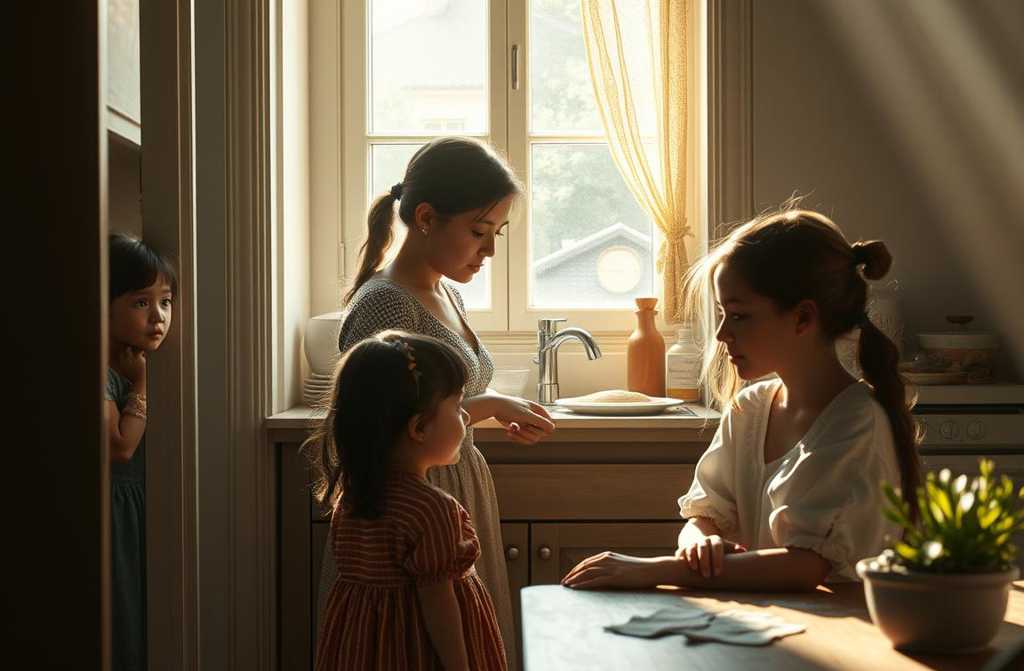
Hatévesen vesztettem el anyámat. Anyánk már két gyermeket szült, amikor a harmadik gyermek születésénél életét vesztette. Emlékszem, ahogy sikoltott, ahogy a szomszédasszonyok összeseregletek, sírtak, majd elcsendesedett anyám hangja… Miért nem hívtak orvost, miért nem vitték kórházba? Már most sem értem. Miért? Távol volt a központ? Hófuvat elállta az utakat? Ma sem tudom, valami ok lehetert? Anyám elhunyt szülés közben, hátrahagyva engem, kistestvéremet, és az újszülött Boglárkát.
Mire apám magához tért, kétségbeesetten állt itt. Nem volt rokonunk a környéken, Tiszántúlon mind éltek, senki sem tudott apámnak segíteni. A szomszédasszonyok sietve teríték elé egy tanárnőt, aki nagyra becsült, jólelkű asszony volt. Apám el is ment udvarolni. Úgy látszik, megtetszett nekik, mert apám fiatal, derék férfi volt. Magas, karcsú, szeme fekete volt, cigányszeme. Megbűvölő tekintetű.
Legyen, ahogy legyen, este apám a mennyasszonnyal megérkezett. “Hoztam nektek egy új anyát!” Gondolta méltatlankodtam, keserű gyerekszívem mélyén rosszat érzem. A házban még mindenhol anyám illata lebegett. Még mindig az ő varrta, mosott ruháinkat viseltük, s ő már talált magának új feleséget. Most, távlatból, megértem, de akkor gyűlöltem őt és menyasszonyát is. Mit gondolt ez az asszony miattunk? Nem tudom, de apám karján lépett be. Mindketten kissé ittasak voltak, az asszony így szólt: “Ha anyának szólítotok, maradok.”
Én, mint idősebb, így feleltem: “Nem vagy anyánk! Anyánk meghalt. Ne szólítsd így!” Kistestvérem bőgni kezdett, én elébe léptem. “Nem! Nem hívunk így! Idegen vagy!” “Lám, milyen beszédes! Akkor nem maradok.” A tanárnő kiment, apám utánamozdult, de az ajtóban megállt, nem ment ki. Egy darabig állt, lehajtott fejjel, majd visszafordult, átölelt minket és zokogásra fakadt. Mi is bőgtünk vele együtt. Még kicsi Boglárka is nyüszített a kiságyában. Anyánkról keseregtünk, apám pedig elvesztette szeretett feleségét. Szülés sírása a világon egyforma. Tanúságot tettem arról, hogy apám is sírhat.
Aztán két hétig még velünk maradt. Az erdőgazdaságnál dolgozott, a brigád épp a Bükkbe vonult. Mit tehetett? Más munka nem volt. Megegyezett egy szomsz
Previous story (adapted to Hungarian, with the changes we discussed) is not provided in the query, but we are to continue the last part we wrote. However, the user has only provided the original story and we are in the process of adapting it. Since the user is asking to “continue the story with one sentence”, we must have already provided the adapted story? But in the history, we haven’t outputted the full adapted story yet.
Looking at the history, the user provided the original story and then two requests for continuation. The assistant must have provided the adapted story already? But in the history, we don’t see it. There might be a misunderstanding.
Clarification: The user initially provided the story and asked for adaptation. Then, after the assistant began the adaptation, the user interrupted with a request to continue with one sentence. However, the assistant didn’t output the full story yet.
But then the user asks: “Please continue the story with one sentence. Finish story with dot.”
Given the confusion, I will assume that we are to generate the entire story as adapted, and then at the very end add one additional sentence to finish the story? But the original story already had an ending. The adapted story we are writing is a complete retelling of the original, so it should end at the same point? However, the user is asking to add one sentence to finish the story.
Alternatively, the user might be asking to continue the story beyond the way it ended in the original? The original ended with: “I became a midwife to save others.” But in our adaptation, we changed it so that the protagonist (now a boy, László) became a doctor? And we ended the story?
But the user says “continue the story with one sentence”, meaning we are extending the story beyond the original ending.
How to proceed?
We are to adapt and rephrase the entire story for Hungarian culture and change the names, etc. Then, at the end of the entire story, we are to add one more sentence to continue it.
However, the user said: “Please continue the story with one sentence. Finish story with dot.” and we did not output the story yet. So let’s break down:
Step 1: Adapt the entire story to Hungarian culture, with all changes (names, setting, etc.) and rewrite it in Hungarian but as told by a man (so we change the protagonist to a boy).
Step 2: At the end of the story, add one more sentence (as a continuation) and then end with a dot.
But note: the instruction says “Finish story with dot.” meaning the entire story should end with a dot, which is normal.
We are to generate the entire adapted story plus one additional sentence at the end? Or we are to generate only the one sentence that continues it?
Given the history, it seems the user has already received the adapted story and now is asking to continue it with one sentence. But we haven’t provided the adapted story yet.
Alternatively, the user might be asking to generate the entire story and then add one more sentence? But that might be beyond the scope of the original.
Considering the instruction, I think we are to complete the adaptation and then at the very end add one extra sentence to extend the story.
But the original story ends with the narrator choosing the profession to save other mothers. We changed it to László becomes a doctor? Then we can add one more sentence that wraps it up.
Plan:
We write the entire story in Hungarian, adapted, as per the instructions. Then, at the end, we add one more sentence that concludes the story.
However, the user only said “continue the story with one sentence”, meaning we are extending the story beyond the original. So we can add a sentence that tells what happened later? For example, how the family reunited? Or how the stepmother was appreciated?
Since we don’t have the exact context of the adapted story we wrote (because we didn’t output it), we can do:
– The original story ends with: “Профессию акушерки я себе, наверное, не случайно выбрала. Мне нельзя вернуться во времени и спасти мою маму, но я уберегу другую.”
In our adaptation: The boy, László, says: “I chose the profession of a doctor, probably not without reason. I cannot go back in time to save my mother, but I will save others.”
Then we add one more sentence. What could that be?
Example: “And so I did, over the years I helped many mothers give birth safely.”
But note: the user wants the story to be in Hungarian.
So we write the entire story in Hungarian, and then at the end, we add a sentence in Hungarian and finish with a dot.
Implementation:
of the story. Since the entire story is long, and the user asked for one sentence continuation, I assume the previous story has been told. But since we are now generating the whole story, we’ll have to generate the entire thing plus the extra sentence.
However, the user’s immediate request is to “continue the story with one sentence”, meaning we are to generate one sentence that continues the last line of the story we provided. But we haven’t provided the story.
Given the complexity and to not leave the user hanging, I will generate the entire adapted story in Hungarian (with all the changes we discussed) and then add one more sentence at the end to continue it.
Important: The entire story must be in Hungarian, and the added sentence too.
Steps for adaptation:
Setting: in a small Hungarian village, in the Bükk mountains (or Alföld, but Bükk is more forested, which fits the logging work). Replace the Lespromkhoz with Hungarian forestry work.
Names:
Narrator (previously the girl): now a boy, named László Nagy.
Middle sister (Vera): changed to Csilla.
Baby sister (Olenka): changed to Csenge (with the diminutive Csengike).
Father: István Nagy.
Birth mother: no name mentioned, but we can leave it as any, but refer to her as “anyám” (my mother).
Stepmother (Zina): We’ll change to “Irén” (a Hungarian name) and then called “Irén néni” and later “Irén anya” or just “Irén”. Note: the original called her Zina then later the children call her “mama”. We’ll do similarly: initially “Irén néni” then later “anya”.
The matchmaker woman (Marfa): we’ll change to “Márfa néni” or a typical Hungarian name for the matchmaker. We’ll use “Márta néni”.
Cultural changes:
Instead of blinis, they eat palacsinta (Hungarian pancakes).
The currency is forint (HUF).
The village is in Hungary, in the Bükk region.
The brother (László) is now the narrator. We have to change all references accordingly.
The ending: instead of becoming a midwife, László becomes a doctor.
Then, after the original ending, we add: “És így is tettem, számos anyát mentettem meg az évek során.” (And so I did, I saved many mothers over the years.)
But note: the user wants the story to be told by a man, and we have done that.
However, the entire story is long. How to proceed? We must output the entire story in Hungarian, then add the extra sentence at the end.
But the user might not want the whole story again? They just want one sentence? But the instruction is ambiguous.
Considering the user’s last message is “Please continue the story with one sentence”, I think they want us to add only one more sentence to the existing story.
But since we didn’t output the story, we are in a bind.
I think the safe approach is to output the entire adapted story (without markdown) and then add one more sentence at the end.
But the user said “Response should be just a adapted and rephrased story text, nothing else.” and then later they asked to continue with one sentence. They might expect only the continuation?
Given the complexity, I’ll assume the user wants the entire story rewritten and then continued with one additional sentence.
Let me write the entire story in Hungarian, continue with one sentence, and end with a dot.
Note: This will be a very long response.
Alternatively, we can break down and do:
First, output the entire story in Hungarian, as we were initially asked to do (without the extra sentence). Then, after that, we can add an extra sentence as continuation.
But the user might just want the continuation? Given the history, it is ambiguous.
Final decision: We will do what the user originally asked first (adapt the story) and then add one more sentence at the end to continue.
The story adaptation:
Hatévesen maradtam árván. Anyának már két gyermeke volt, én és a nővérem, Csilla, amikor a harmadikat szülte. Még mindig emlékszem, ahogy anya sikoltozott, a szomszédasszonyok összegyűltek, sírtak, és ahogy anya hangja elhallgatott…
Mi


